
Kitchen Manager Certification: How to Become a Certified Kitchen Manager
Learn about what a kitchen manager certification is, why it's important, and different options for kitchen manager training and certification programs.

ผู้เขียน
 RESOURCE
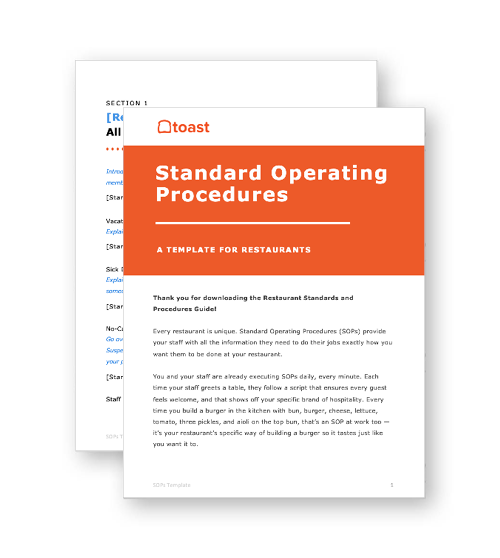
SOPs Template
This template will help you create SOPs for your entire business, so you can create consistency and easily train employees.
ดาวน์โหลดฟรีWhat is a Kitchen Manager Certification?
A kitchen manager certification - sometimes referred to as a food safety manager certification - is a credential obtained by individuals in the restaurant and food service industry who have demonstrated their knowledge and competency in food safety practices and regulations. This certification ensures that kitchen managers are equipped with the necessary skills to prevent food borne illnesses and promote a safe dining experience for customers.
In this article about kitchen manager certifications, we will cover:
What a kitchen manager certification is and why they’re vital to your restaurant’s food safety protocol
Your options for training and certifications, both online and in person
What you need to get started
SOPs Template
This template will help you create SOPs for your entire business, so you can create consistency and easily train employees.

Importance of Kitchen Manager Certifications for Food Safety
Food safety refers to the practices and procedures implemented by food establishments to handle, prepare, and serve food in a way that reduces the risk of contamination and food borne illnesses. These illnesses can arise from the consumption of food that has been mishandled, stored improperly, or contaminated with harmful bacteria, viruses, or allergens.
Food safety practices are essential in restaurants, and vital part of offering an enjoyable guest experience. Food borne illness can be prevented by using proper handling techniques, and employees should be trained in these practices before they begin working in the kitchen.
For kitchen managers, the following elements are typically included when referencing food safety in restaurants:
Personal Hygiene
Illness Protocol
Sanitation and cleaning
Intake and evaluation of ingredients and products
Food prep, storage, handling, and temperature control
Allergen management and menu labeling
Emergency preparedness in the case of food borne illness
Kitchen manager certifications play a vital role in upholding food safety standards in restaurants. There is a difference between a food safety manager and a food handler. A food handler is a person employed in food-service who is directly involved in the preparation, serving, storing, or general handling of food products. A food safety manager typically undergoes a more intensive and expansive certification process, as they are in charge of understanding, implementing, and training staff in proper food safety procedures at their establishment. In addition to kitchen manager certifications, food establishments must also ensure that their food handlers hold valid food handler certifications. These certifications validate that individuals involved in food handling have received proper training and possess the necessary knowledge to maintain food safety standards.
These certifications ensure that managers have a comprehensive understanding of best practices and regulations, enabling them to effectively train and supervise food handlers. By having certified kitchen managers, food establishments can mitigate the risk of food borne illness outbreaks and maintain a positive reputation for their commitment to food safety.
Online Courses for Kitchen Manager Certifications and Food Handler Certifications
The advancement of technology has made it convenient for individuals to obtain kitchen manager and food handler certifications through online training programs. It’s important to check whether the course your considering is state-approved, and has an accreditation through an organization like The American National Standards Institute (ANSI).
Check with your employer or state to learn which food handler certification program is required in your area. This interactive map from Premier Food Safety featuring food manager certification requirements by state can help you find those answers. Restaurants and other food service establishments may receive discounts for food handler or food safety certification programs through their local restaurant association or even as members of The National Restaurant Association, so always make sure to check.
To find accepted, accredited options for kitchen manager or food handler certifications in your state, check out this database from Always Food Safe, featuring ANSI-CFP accredited courses by state and county. Statefoodsafety.com has another database where users can find ANAB-accredited and state-accepted certifications online.
One widely recognized certification program is ServSafe, which offers online courses on food safety training, including kitchen manager certifications. These courses cover topics such as allergen awareness, proper food preparation techniques, and effective sanitation practices.
Besides ServSafe, here are a few options for online kitchen manager certification programs:
360 Training - Food Safety Manager Training + ANAB-Accredited Certification Exam
National Registry of Food Safety Professionals - Food Safety Manager Certification
What do you need for a kitchen manager certification
To obtain a kitchen manager certification, individuals are typically required to:
Complete a state-approved training course. These may cost a fee, or a voucher may be available from your employer.
Pass an accredited food certification exam accepted by their local health department. You can either choose to take a proctored exam in-person, or online. Many online training options include a certification exam at the end of the program. This exam evaluates their knowledge of food safety practices and their ability to implement them in real-world scenarios.
By opting for online training options for kitchen manager and food handler certifications, individuals can conveniently complete the required coursework at their own pace. These online programs often provide interactive modules and practice exams to help learners absorb and apply their knowledge effectively.
Obtaining a kitchen manager certification is crucial for maintaining food safety in restaurants. These certifications ensure that managers are well-versed in food safety practices and can effectively train and supervise food handlers. By exploring online options such as ServSafe, individuals can conveniently obtain their kitchen manager and food handler certifications, contributing to a safer and healthier dining experience for all.
บทความนี้มีประโยชน์สำหรับคุณหรือไม่
ข้อความปฏิเสธความรับผิดชอบ ข้อมูลนี้จัดทำขึ้นเพื่อวัตถุประสงค์ในการให้ข้อมูลทั่วไปเท่านั้น และการเผยแพร่ข้อมูลนี้ไม่ถือเป็นการรับรองใดๆ Toast ไม่รับประกันความถูกต้องหรือความสมบูรณ์ของข้อมูล ข้อความ กราฟิก ลิงก์ หรือรายการอื่นใดที่รวมอยู่ในเนื้อหานี้ Toast ไม่รับประกันว่าคุณจะได้รับผลลัพธ์ที่เฉพาะเจาะจงใดๆ หากคุณปฏิบัติตามคำแนะนำในเอกสารนี้ คุณอาจต้องปรึกษาผู้เชี่ยวชาญ เช่น ทนายความ นักบัญชี หรือที่ปรึกษาทางธุรกิจ เพื่อขอคำแนะนำที่เหมาะสมกับสถานการณ์ของคุณโดยเฉพาะ
 กำลังมาแรง



Subscribe to On the line
Sign up to get industry intel, advice, tools, and honest takes from real people tackling their restaurants' greatest challenges.
เมื่อส่งข้อมูล แสดงว่าคุณตกลงที่จะรับอีเมลการตลาดจาก Toast เราจะจัดการข้อมูลของคุณตาม คำชี้แจงความเป็นส่วนตัว ดูข้อมูลเพิ่มเติมสำหรับผู้อยู่อาศัยในรัฐแคลิฟอร์เนียได้ที่ คลิกที่นี่