
How to Write a Great Restaurant Manager Resume (Skills, Examples)
Create a resume that helps you land that dream management job.

ผู้เขียน
 RESTAURANT RESOURCE
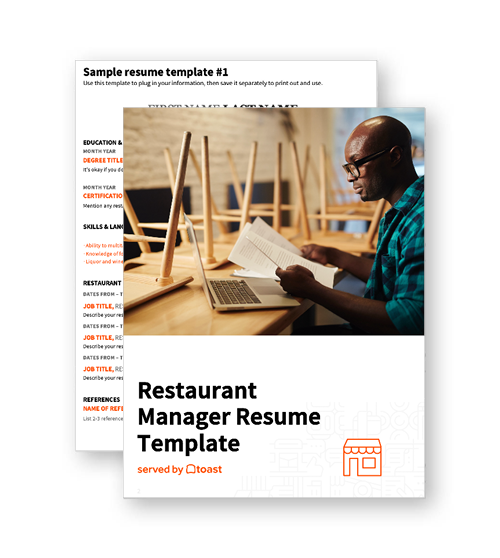
Restaurant Manager Resume Template
Get hired for that dream manager job with the restaurant manager resume template, a customizable Word doc that outlines skills, education, and more.
ดาวน์โหลดฟรีA restaurant manager job isn’t your average nine-to-fiver. If you’re already in a management role and you’re looking for a new gig, you know this. But maybe you’re a server, a bartender, or a cook, wanting to step into a restaurant management position. Awesome — you’re going to crush it. Either way, we’re psyched to hear you’re growing your career in the industry.
It’s tough work, but the state of restaurant management is strong. The job outlook for these roles is looking good — it’s expected we’ll see an 11% growth in restaurant management jobs during the next 10 years, which is much faster than the average across other industries. And what about pay? How much do restaurant managers make right now? The Bureau of Labor Statistics says the average salary for a restaurant manager in 2018 was $54,240, which varies state to state.
Restaurant management is a rewarding career path. There are plenty of jobs, but competition for positions at the good restaurants is fierce. Restaurant managers today are looking for more stability, comprehensive benefits, work-life balance, and workplace environments that support everyone’s professional growth. Owners and operators are testing new management models to keep up and stand out, which means jobs at these establishments are more competitive.
But with a killer resume and personalized outreach, you’ve got a good chance of getting offered the job.
This Microsoft Word restaurant manager resume template features sample copy and design, helping you get a head start on the most challenging part of creating a resume. Download the template and use the advice below to customize your resume so it stands out in the stack.
Restaurant Manager Resume Template
Get hired for that dream manager job with the restaurant manager resume template, a customizable Word doc that outlines skills, education, and more.


Subscribe to On the line
Sign up to get industry intel, advice, tools, and honest takes from real people tackling their restaurants' greatest challenges.
เมื่อส่งข้อมูล แสดงว่าคุณตกลงที่จะรับอีเมลการตลาดจาก Toast เราจะจัดการข้อมูลของคุณตาม คำชี้แจงความเป็นส่วนตัว ดูข้อมูลเพิ่มเติมสำหรับผู้อยู่อาศัยในรัฐแคลิฟอร์เนียได้ที่ คลิกที่นี่
How to Write a Restaurant Manager Resume
Unless you know the owner, your resume is the first impression a potential employer will have of you. This is why creating a great resume is one of the most important steps when searching for a job.
Writing a stand-out restaurant manager resume is like writing a resume for any other career field: You need to convey your experience briefly while also being specific. You need to showcase your skills by describing your previous roles and responsibilities. You also need to focus on whether it’s professionally presented.
When sifting through stacks of resumes, hiring managers want to understand why you’re the best person for the role. That involves both the experience on your resume as well as how it’s presented.
Alex Mimms, a technical recruiting team lead at Toast, explains what hiring is like from her perspective. “If you’re looking for someone who needs to be detail-oriented, maybe they have all the right titles on their resume, but their resume has typos or capitalization issues or the formatting is inconsistent. If you need someone who’s paying attention to details, [their] messy resume tells you everything you need to know,” she says.
Having a template is only the first step. Thoroughly research the restaurant, tailor descriptions of your experience, and use key action verbs to create a great resume.
Here’s some other advice to keep in mind when writing a restaurant manager resume.
Know the restaurant you’re applying to.
Every resume should be tailor-made for the restaurant you’re applying for. Once you know your target audience — whether it’s a fast-casual poke place or a fine-dining Italian bistro — all other resume decisions will fall into place.
Ask yourself questions like these:
Is the job purely about managing restaurant staff or will it require both cooking chops and customer service skills, too?
Will I be required to run pre-shift meetings and make sure every server and cashier is on their sales game?
Who’s the employer? A franchisee, a career-switcher hoping to make a name for themselves, or a chef/owner whose passion is really the food?
Once you’ve figured out what’s most important to the restaurant and the job you’re applying for, tailor your resume to fit. You’ll know which skills or traits to highlight, which stories to mention, and which parts of your background will be most interesting.
If the job description is well written, it’ll contain hints about the restaurant's core values and what recruiters are looking for. Value-driven job descriptions will help you decide if the culture is a good fit and, if it is, you can tailor your word choice when describing previous job experience.
It is possible, though, for a restaurant manager job description to be bare bones. Sometimes the job duties will just be listed like this:
Manage and oversee the entire restaurant operation
Deliver superior guest services
Ensuring guest satisfaction
Plan and develop guest loyalty programs
Plan new and update existing menus
These are pretty high-level duties for a restaurant manager, but you can still tailor your resume to fit. Prove you can manage and oversee the entire restaurant’s operations by being specific about the number of people you managed in your last position. Show how you’ve delivered superior guest service by providing a real-life example of how you used problem-solving skills for a customer complaint. Describe the menus you’ve planned, how they boosted sales that quarter, and things like that.
Prioritize data over fluffy descriptions.
Who would you hire? Someone who "planned new and updated existing menus" or a candidate who "increased specials sales by 35% by curating and marketing a seasonal fall menu"?
The second description more accurately describes the job while also providing an essential piece of data to show whether or not they were effective in the role. It’s great to have experience planning a menu, but owners and operators want to know how it impacted the business.
Impact is a great thing to keep documented, even before searching for a new job. Keeping tabs on how you’re growing professionally is extremely important for professional development.
If you don’t have quantitative performance data, take advantage of qualitative data. Instead of saying, "Managed a team of wait staff," show how you helped the staff succeed: "Mentored and motivated a team of 12 waiters, two of whom were promoted in the past year."
These details show that not only are you an effective team player, you’re a leader who takes your staff’s success seriously.
Provide relevant references.
Everyone knows everyone in the restaurant industry, which is why it’s necessary to include a section for managers or mentors you’ve had during your career so far.
Before throwing their name and phone number on your resume, double-check that these people will vouch for you. You might want to include your old boss on your resume, but you need to ask her for permission first. Connecting with your prospective references will also help you get a better idea of what they may say to potential employers. If it doesn't sound like they'll give you a positive review, don't include them.
Once you know who’s happy to give you a glowing review, include two to three names, email addresses, and phone numbers in a section on your resume.
The last thing here: Before the hiring team calls your references, give your references a heads up. Explain the role, what the hiring manager’s looking for, and why you think you’d be a good fit, using examples from your time working with them, so they’re prepared for the conversation.
Define what sets you apart.
You should be able to answer this question when it’s asked in an interview, but you should also prepare your resume to showcase what sets you apart in order to get you through to the interview stage.
Your resume’s appearance can be a massive asset. Recruiters don’t want to look at a lousy resume with inconsistent design. Get creative with your template if you think it’ll help, but don’t go crazy — you want the information to be clear and easy to scan without distractions.
Defining what sets you apart also includes looking inward. Ask yourself questions like:
What have I accomplished in the past year?
What do I still need to learn to meet my professional goals? (And better yet, what are my professional goals?)
What are the unique qualities I bring to the table?
How does my background serve me?
In the restaurant manager resume template, there’s a place at the top to include a short bio of yourself. This spot should be your first priority, since it’s the first thing a hiring manager will look at.
Get That Dream Job
The best restaurant managers are motivators, trainers, bussers, food runners, bartenders, servers, customer service representatives, and conflict mediators, all in one.
It’s a tough job, but if you use these tips and the template above, you can create a resume that’ll help you land that dream job.
Related Restaurant Resources
บทความนี้มีประโยชน์สำหรับคุณหรือไม่
ข้อความปฏิเสธความรับผิดชอบ ข้อมูลนี้จัดทำขึ้นเพื่อวัตถุประสงค์ในการให้ข้อมูลทั่วไปเท่านั้น และการเผยแพร่ข้อมูลนี้ไม่ถือเป็นการรับรองใดๆ Toast ไม่รับประกันความถูกต้องหรือความสมบูรณ์ของข้อมูล ข้อความ กราฟิก ลิงก์ หรือรายการอื่นใดที่รวมอยู่ในเนื้อหานี้ Toast ไม่รับประกันว่าคุณจะได้รับผลลัพธ์ที่เฉพาะเจาะจงใดๆ หากคุณปฏิบัติตามคำแนะนำในเอกสารนี้ คุณอาจต้องปรึกษาผู้เชี่ยวชาญ เช่น ทนายความ นักบัญชี หรือที่ปรึกษาทางธุรกิจ เพื่อขอคำแนะนำที่เหมาะสมกับสถานการณ์ของคุณโดยเฉพาะ
 กำลังมาแรง


Subscribe to On the line
Sign up to get industry intel, advice, tools, and honest takes from real people tackling their restaurants' greatest challenges.
เมื่อส่งข้อมูล แสดงว่าคุณตกลงที่จะรับอีเมลการตลาดจาก Toast เราจะจัดการข้อมูลของคุณตาม คำชี้แจงความเป็นส่วนตัว ดูข้อมูลเพิ่มเติมสำหรับผู้อยู่อาศัยในรัฐแคลิฟอร์เนียได้ที่ คลิกที่นี่