
How To Write a Catering Business Plan
Caterers combine their chef skills with next-level organization and planning to craft beautiful and delicious foodscapes with flawless service. If this sounds like your dream job, build your catering business plan with this template.
ผู้เขียน
 RESOURCE
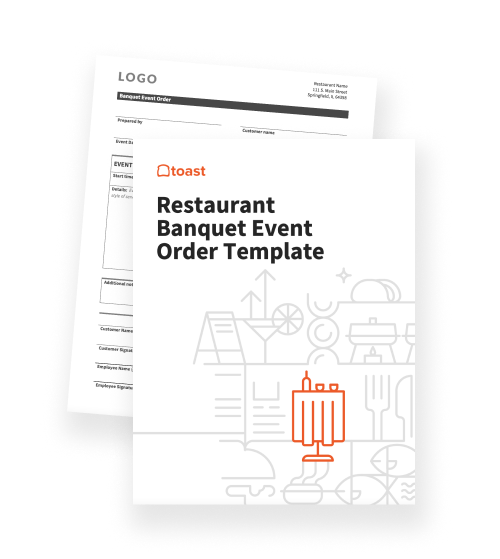
 Restaurant Banquet Event Order (BEO) Template
This free BEO template can help your restaurant optimize incoming catering requests and streamline documentation.
ดาวน์โหลดฟรีBusiness Plan for Catering Businesses Guide
Catering businesses navigate intersections of the restaurant industry where quality and quantity are always in the balance. Catering is born of a passion for providing good food for some of life's most important events, making a wedding even more delightful or a graduation party that much more memorable.
Some caterers specialize in intimate events for 40 people or less. Others have their mass-production chops ready to go for weddings or conferences with guest lists in the hundreds or even thousands. It all depends on what's in the catering or banquet event order form.
To deliver quality recipes and execute seamless service, you’ll need to develop a system of planning to cater events that works for you. Whether you’re taking your home kitchen to clients or expanding your restaurant’s services, a business plan is a good place to start.
Why Build a Catering Business Plan?
Planning is the name of the game in catering, and sections of your business plan will be resources for your potential investors, your clients, and future you as you navigate the many steps that go into setting up a new catering business.
A detailed roadmap is critical for the success of your catering business.
Catering requires extensive planning, menu ideas, and preparation no matter the scale of the operation. Building a detailed business plan forces you to prepare to plan events – it gets you thinking about the supply chains you have access to, the labor required to prepare and execute recipes, and what kinds of local networks you’ll be working in.
Caterers often juggle working with event planners, decorators, and venue managers while delivering on preferences and whims of your client – your business plan solidifies your vision so that you can communicate it to business partners and clients.
How to Write a Catering Business Plan (Description, Examples, Proposals)
While the specifics of a business plan for a catering operation are unique, this restaurant business plan template is a helpful tool for imagining and executing your vision for a catering business.
Download a customizable version of the template and read on to learn more about how to make it work for your catering operation.
Restaurant Business Plan Template
No matter where you’re at in your restaurant ownership journey, a business plan will be your north star. Organize your vision and ensure that nothing is overlooked with this free template.

Elements of A Catering Business Plan
Executive Summary
Make a good first impression with a concise introduction to your concept and a summary of the operations of your catering business. An executive summary introduces key elements of your business plan – consider providing an overview of the budget, the business’s mission and core values, and a coherent vision for your recipes and brand.
Imagine an audience for the executive summary as you write it. How can you choose language and present your concepts so to grab the attention of potential investors, partners, and clients to get them interested in your idea and convince them to keep reading? How will the client experience you provide, from sales to execution, have your catering company stand out of the ranks?
Company Overview
The company overview works with the executive summary to provide a quick look at your catering business, but this section is more practical than flashy. Provide a glossary for the rest of your business plan by describing your style of food and approach to service, providing information about the ownership and management of your business, and describing the client experience.
A particular concern of a catering business is delivering food to clients. Detail how you will travel with prepared food, if you plan to build or purchase a traveling kitchen, and what types of venues you see yourself working in. Consider including information about the kinds of jobs your catering business will create and how you will find talent to fill the roles you need to.
Team and Management
Start this section by defining your role in your catering business as the owner, manager, chef, research and development team or some combination of those roles. Then, provide information about who is going to execute the additional responsibilities and how you will find the talent to fill those roles.
Unlike some other food service models, catering businesses can choose the scale on which they operate, and situations might require some innovative scaling. You might be a small, intimate family team or a contingent of dozens of managers, chefs, cooks, and service staff. Alternatively, you might hire from a pool of local staff when you need them on an event-by-event basis, keeping only a few essential employees on the payroll. Define the scale of your catering business in your plan for potential investors or partners.
Sample Menu
As a caterer, you will likely find yourself crafting custom menus for your clients from a list of recipes you’ve developed and tested – showcase both sample event menus and a larger recipe list in your catering business plan.
These menus from Catering Works are a great example of how you might imagine menus for different events. Catering Works emphasizes that a custom menu proposal including food and beverages is crafted for each client’s needs. How you plan to build menus for your clients could be included in this section of your business plan.
Your sample menu provides a lot of information to potential partners or investors and prompts you to start thinking about the finer details of your business. Consider providing information about how you will produce and deliver your services and what specialized and potentially cost equipment you need.
Anticipate what questions clients or partners might have about your menu as you design the sample and be ready to answer those concerns. Do you have options for the range of dietary restrictions? How flexible are your recipes?
Sample menus are one of the greatest assets of your business plan and building menus is a productive exercise for ensuring that your plan is airtight before presenting it to clients or investors.
Restaurant Banquet Event Order (BEO) Template
This free BEO template can help your restaurant optimize incoming catering requests and streamline documentation.
Market Analysis
Catering is a relatively niche market – customers don’t go looking for caterers until they have an event to plan or group of people to feed. It's not like a restaurant where any customer could decide that this random Tuesday is the day to engage your services. The approaches you take to organizing, building, and marketing your catering business depend on the types of clients you can expect to serve.
Think back to the last time you were at a PTA meeting eating soggy finger sandwiches drenched in cheap mayonnaise and chicken salad without a hint of texture. Or, perhaps you had the good luck to find yourself a wedding recently but the chafing dishes of dry lobster mac and cheese and miniature meatballs distracted from the magic.
Those less-than-perfect experiences are market openings in your area for high-quality finger foods or family style event catering that doesn’t put quantity before quality. Finding that market opening can be tricky, but identifying a market opening and potential client base are central to your business plans.
Marketing and Publicity
Finding an opening in the catering market will help to direct your marketing and publicity strategy. Word-of-mouth marketing can be a valuable asset to caterers — everyone who is wowed by the food at your events will keep you in mind for their own upcoming events — but putting yourself in the position for your clients to find you in local directories or online is equally important.
There are two types of clients that caterers will generally attract: clients who need to feed groups of people regularly, and clients who are hosting one-time events. Corporations, non-profits, event planners, even some venues and hotels – those will be the regular clients of a catering business, and marketing yourself to those clients through networking is crucial.
Marketing online with a full website and a consistent social media presence will keep your clients thinking about you. Networking, maintaining relationships between your company (or the sales team), clients, and partner businesses like venues can help to ensure steady business.
If your market research leads you to a particular need for a catering business in your area, you might target your business to fill that need and state explicitly in your marketing plan how you will capture that market opening. If you’re a family style caterer, for what kinds of regular events in the area can you expect to be considered and hired?
Branded Graphics
One of the most exciting aspects of building a cohesive brand across your business plan is creating branded graphics that convey your brand’s concept to both potential investors and customers. Think about how you might represent the ethos of your catering business and the experiences that you plan to offer your customers through branded graphics and the design of the documents in your business plan.
Branding for a catering company can be placed on everything from menus and business cards to the labels on chafing dishes. Work to extend the aesthetic of your brand into all of your operations – everything from tablecloths to delivery van vinyl wraps can build brand recognition.
Business Operations
Information about the client experience, sales and inventory, accounting, management structure, and the supply chain for the products on your menu is included in the business operations section of your business plan. Consider the role you plan to play in your business as well – will you be the ringleader, head chef, or a hands-off owner/manager?
Catering companies focus on delivering a coherent experience and your business plan might include detailed expectations for how you and your staff will approach clients during sales and handle their accounts through to execution.
This is your ultimate chance to plan for your business – build an outline of how your business will run from the daily to the quarterly. Who will be attracting clients and making sales? Cooking and serving at events? Delivering food and equipment? Who is ordering to ensure that all the necessary food and equipment is ready when it’s needed? Answering these questions will help you to complete detailed and accurate sales and financial projections.
Restaurant POS Comparison Tool
A free, customizable Restaurant POS Comparison Tool to research and compare point of sale systems in one Excel spreadsheet.
Sales Forecasts and Operating Expenses
The operating expenses for a caterer include the costs of labor, insurance, products, supplies, equipment, rentals, incidentals, etc. Additional expenses associated with a particular supply chain or networking and marketing costs are worthwhile considerations.
One common analysis to include in a business plan is a “break-even analysis” which compares the sales required to break even with the cost of expenses each month. Investors will be interested in the potential for profit and loss before they contribute to your business, but to produce a profit and loss statement for a business that isn’t open yet will require some thoroughly educated projections.
A cash flow analysis details how you plan to spend on labor, supplies, and operations to show investors that the company can support itself without additional investments. Consider how the cost of supplies, labor, taxes, maintenance on equipment, cleaning supplies, and paper or plastic for service balance out with revenue by the end of each fiscal quarter.
Financing and Loans
Opening a catering company might cost less than a brick-and-mortar restaurant – less staff to hire and train, a need to stock only what products you’ll be selling soon, and likely lower rent on a space for a kitchen than full restaurant. Even so, it’s crucial to carefully consider your finances and prepare to apply for necessary lines of credit or loans.
This financing guide is a useful resource for figuring out your fiscal fundamentals – it goes into detail about loan options from brick-and-mortar banks, alternative loans, Small Business Association (SBA) loans, merchant cash advances, business lines of credit, crowdfunding, asking family or friends, commercial real estate loans, equipment financing, and purchase order funding.
Depending on the amount of initial investment needed, you might work with a bank or private investor to get your catering business off the ground. Include information about how you expect investors to be involved with the business and any benefits they might gain by investing, such as discounts on services or priority booking.
Once you have a plan to fund your catering business, it is crucial to include that information in your business plan. Provide potential investors with information about other investors and detailed financial plans about the projections of profit and expenses of your business.
How to Present a Catering Business Plan
There are a few ways to prepare to communicate with investors about your business plan and get them interested. As you write and edit your plan, you’ll have become the world’s only expert on your catering business. Remember that the way you talk about your business should be tailored to the situation you find yourself in.
First, send your business plan to investors and banks far and wide – put your concept and plan in the hands and minds of as many people as possible. You can’t hear no (or yes!) unless you ask.
You might also want to try out networking events, where your 30-second elevator pitch will come in very handy so you can communicate everything you need to about your plan for a catering company quickly. Be sure to include something exciting or make an opportunity for questions to keep people talking.
Once you secure a meeting with a potential investor or partner, you’ll want a more detailed presentation that presents all the key elements of your business plan – for a catering business, that will likely include the experiences at the core of your business.
It’s good to anticipate potential questions and prepare answers for questions you encounter for the first time. When networking, be honest and genuine, even if you don’t have a ready answer for each question that comes your way – investors will be interested in your charisma and savvy just as much as your ability to build a detailed plan.
Get Catering!
Build your business plan, read it over and over again, and make edits until it perfectly encapsulates the vision you have for your company. Then, once you've got your business off the ground, you'll have to keep those pitching skills sharp, because you'll be showing off what you can do for clients at every function you cater — and hopefully, in future client meetings with all the guests you delighted at your last event.
Related Catering Business Resources

Subscribe to On the line
Sign up to get industry intel, advice, tools, and honest takes from real people tackling their restaurants' greatest challenges.
เมื่อส่งข้อมูล แสดงว่าคุณตกลงที่จะรับอีเมลการตลาดจาก Toast เราจะจัดการข้อมูลของคุณตาม คำชี้แจงความเป็นส่วนตัว ดูข้อมูลเพิ่มเติมสำหรับผู้อยู่อาศัยในรัฐแคลิฟอร์เนียได้ที่ คลิกที่นี่
Restaurant Business Plan Template
No matter where you’re at in your restaurant ownership journey, a business plan will be your north star. Organize your vision and ensure that nothing is overlooked with this free template.
บทความนี้มีประโยชน์สำหรับคุณหรือไม่
ข้อความปฏิเสธความรับผิดชอบ ข้อมูลนี้จัดทำขึ้นเพื่อวัตถุประสงค์ในการให้ข้อมูลทั่วไปเท่านั้น และการเผยแพร่ข้อมูลนี้ไม่ถือเป็นการรับรองใดๆ Toast ไม่รับประกันความถูกต้องหรือความสมบูรณ์ของข้อมูล ข้อความ กราฟิก ลิงก์ หรือรายการอื่นใดที่รวมอยู่ในเนื้อหานี้ Toast ไม่รับประกันว่าคุณจะได้รับผลลัพธ์ที่เฉพาะเจาะจงใดๆ หากคุณปฏิบัติตามคำแนะนำในเอกสารนี้ คุณอาจต้องปรึกษาผู้เชี่ยวชาญ เช่น ทนายความ นักบัญชี หรือที่ปรึกษาทางธุรกิจ เพื่อขอคำแนะนำที่เหมาะสมกับสถานการณ์ของคุณโดยเฉพาะ
 กำลังมาแรง

Subscribe to On the line
Sign up to get industry intel, advice, tools, and honest takes from real people tackling their restaurants' greatest challenges.
เมื่อส่งข้อมูล แสดงว่าคุณตกลงที่จะรับอีเมลการตลาดจาก Toast เราจะจัดการข้อมูลของคุณตาม คำชี้แจงความเป็นส่วนตัว ดูข้อมูลเพิ่มเติมสำหรับผู้อยู่อาศัยในรัฐแคลิฟอร์เนียได้ที่ คลิกที่นี่