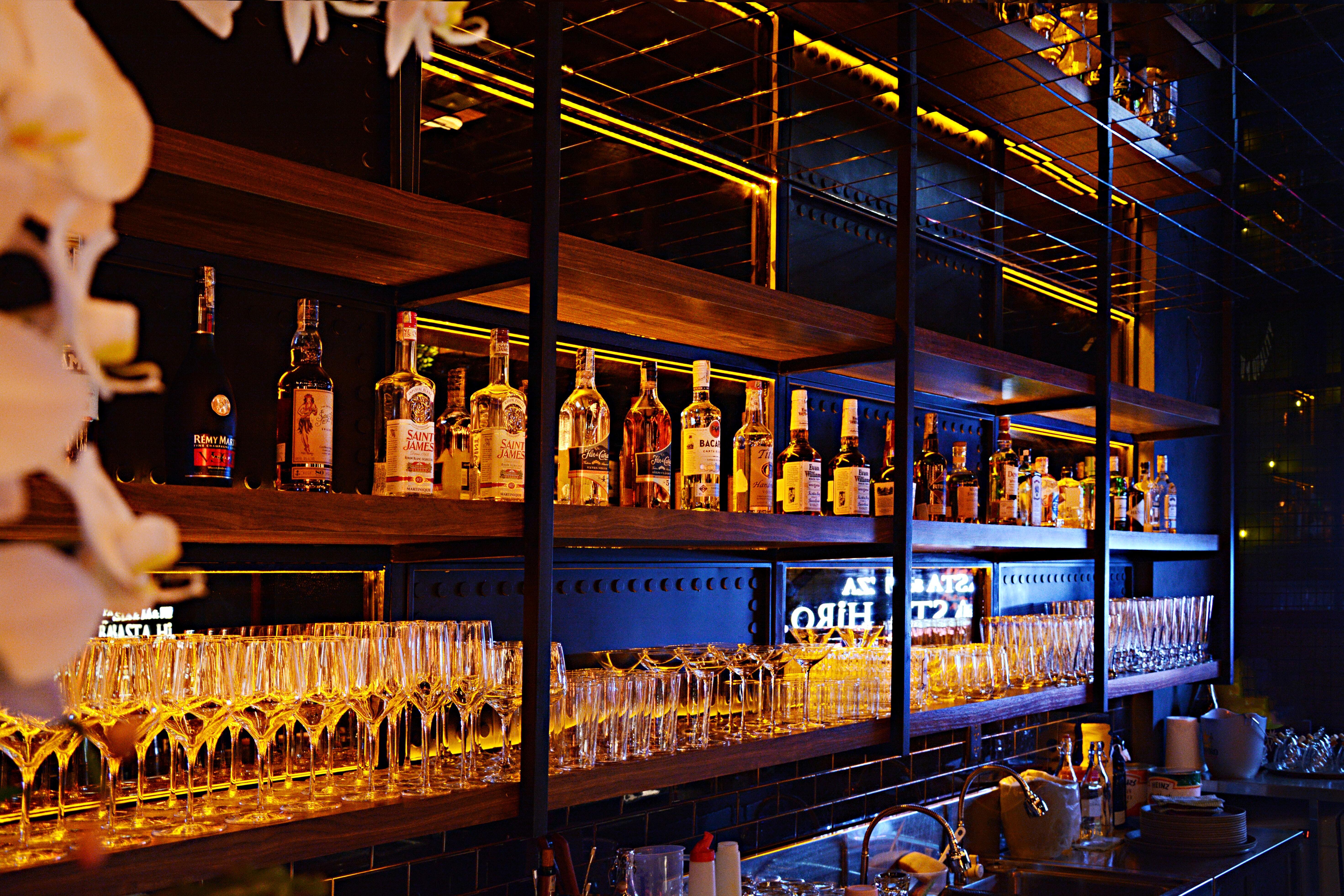
Bar Menu Pricing Strategy: How to Price Bar Menu Items
Make sure your bar prices are suitable for the wallets of your target audience and for the operational expenses of your business.

ผู้เขียน
 RESOURCE
Restaurant Cost Control Guide
Use this guide to learn more about your restaurant costs, how to track them, and steps you can take to help maximize your profitability.
ดาวน์โหลดฟรีBar Menu Pricing Strategy: How to Price Bar Menu Items
If you’re opening a bar for the first time and estimating startup and ongoing costs, or you’re just looking to re-price your bar menu to reflect the current economic climate, figuring out the pricing for each drink on your menu isn’t a simple task. The good news is, on-premise draft pricing data aggregated from nearly 20,000 Untappd for Business Verified Venues indicates that inflation in beer prices recently moderated.
Drink prices are often the deciding factor of whether or not a group will choose your bar for their night out, so be sure the price is right. Whether you’re opening a sports bar or a dive, creating a craft cocktails bar, or starting a natural wine bar, your pricing model will have to align with customer expectations for the type of bar you’re running.
Once you’ve dreamed up your list of delicious cocktails, shots, beers, wines, and non-alcoholic options, it’s time to crunch the numbers and figure out what to charge for each one. The bar and restaurant business operates on slim margins, so taking a data-driven approach to menu prices can help boost profits.
Subscribe to On the line
Sign up to get industry intel, advice, tools, and honest takes from real people tackling their restaurants' greatest challenges.
เมื่อส่งข้อมูล แสดงว่าคุณตกลงที่จะรับอีเมลการตลาดจาก Toast เราจะจัดการข้อมูลของคุณตาม คำชี้แจงความเป็นส่วนตัว ดูข้อมูลเพิ่มเติมสำหรับผู้อยู่อาศัยในรัฐแคลิฟอร์เนียได้ที่ คลิกที่นี่
Restaurant Labor Cost Calculator
Unlock the power of data-driven labor management with our free Restaurant Labor Cost Calculator. Stop guessing and start optimizing your staffing decisions today.

Bar menu pricing
When doing your bar menu pricing, each menu item’s price must cover the cost of its ingredients (also known as pour cost, which can be found through drink recipe costing), but also help chip away at all the other costs of doing business, including labor cost, operational costs, and overhead.
Liquor cost is usually the largest slice of the pie, but there are also other ingredients to consider in your bar cost of goods sold, especially if your bartenders are serving up cocktails. Limes and lemons, mixers, garnishes, syrups, and any other ingredients cost money too, and every slice and squeeze should be accounted for in your pricing. Accurate liquor pricing (and measured pours) can also help improve your bar margins.
What is bar pricing?
Bar pricing is the process of assigning how much a customer will pay for any item on your drink and food menu. Charging the correct amount for every item on your bar menu can help you reach the goals you set in your bar business plan.
We’ll explain the basics of bar menu pricing, as well as some bar pricing strategies you can implement to protect your bottom line and even grow your business.
Pour cost: the most important metric in bar pricing
Ideal pour cost, usually shown as a percentage, indicates how much it costs to make any given drink on your menu and compares that to how much revenue the drink brings in. Across the industry, the ideal pour cost of an alcoholic drink is 20%, says Binwise. A 20% pour cost means the drink generates 80% gross profit.
Here’s how to calculate pour cost:
Drink Price ($) = Ingredient Cost ($) / Ideal Pour Cost (%) Drink Price ($) = 2 / 0.20 Drink Price = $10
How to price a bar menu
Write out your bar menu items.
Calculate the pour cost for every drink — in other words, do drink recipe costing. Inventory platforms can be very helpful in this process.
Determine the bare minimum pour cost you’re willing to achieve with any drink, and work up from there. Various drinks will have different pour costs — well liquor is the cheapest by far with the best markup, so well drinks could be your most profitable items. Wines, though they cost more to procure, can also be sold for a lot more, so even though they won’t be as profitable as well drinks, they’ll still keep check averages high.
Using the formula above, play around with prices until you reach an acceptable pour cost for each item.
Then, test into various other bar pricing strategies below and see what works for your bar.
Over time, look out for trends and progress on your KPIs through your point of sale system. Which drinks are selling? Does anything need to be repriced?
Using menu engineering, determine which drinks are profitable, popular, both, or neither. Then re-design your menu to highlight the popular and profitable items, as well as the profitable ones that could use a popularity boost.
What is a bar menu pricing strategy?
Bar menu pricing strategies are the various ways you can approach choosing how much to charge for every item you offer. By choosing the right pricing strategy, or combination of strategies, you can work towards various business goals, such as:
Generate a 12% net profit margin
Get to 20% pour cost on every drink
Increase revenue so you can offer healthcare or other benefits
Increase revenue and improve staff pay
Increase revenue to save up for a renovation and rebrand
Increase revenue to save up for a new bar POS
What is the pricing strategy of a bar?
Bar must balance the needs of their customers with the needs of their business in order to reliably turn a profit. But luckily, alcohol has a very high markup, so there’s room to experiment with various pricing strategies.
We’ll cover a few different pricing strategies and approaches. You can try out one at a time and see what sticks, but most bar menus can incorporate a variety of these strategies, so don’t be afraid to mix and match. And use the sales data from your bar POS and your inventory solution to do your pricing calculations as precisely as possible, and compare how your menu items’ actual food cost percentage (and pour cost) stack up over time
Gross Profit Margin Pricing for Bars
Gross profit margin pricing involves determining the profitability of each drink and experimenting with prices that bring profit margin per item up. The average pour cost for a bar to aim for is 20%, which leaves 80% gross profit per drink to help cover all the other costs of running a bar.
To calculate profit margin for a specific menu item, use the following formula:
Profit margin = 100 x (Revenue - Pour Cost) / Revenue
What is a good profit margin for a bar?
Bars have some of the best profit margins in the restaurant industry, with an average of 10-15% net profit margin for the business overall. This can be attributed to the significant markup that the industry is able to charge on alcohol.
Factor Pricing for Bars (aka Markup Pricing)
The “factors of production” is an economic concept that represents the markup that a consumer is willing to pay for a product that’s prepared or produced by a business, instead of just sourcing the ingredients and preparing a drink for themselves at home. The service of getting a drink made for you is what drives demand in the bar industry — otherwise, there’d only be liquor stores and no bars, and restaurateurs would be out of luck.
Here’s how to calculate factor pricing for each drink item:
Decide on the pour cost you want to achieve with each drink — for example, 20%.
Then, use the following formula to determine the price factor needed to reach your ideal pour cost.
100 / [ideal pour cost] = [pricing factor]
In this example, it’d be 100 / 20 = 5
Then, to get your ideal price to reach your ideal pour cost, multiply the cost of the drink ingredients by 5.
5 price factor x $2.00 ingredients cost = $10 ideal price
There’s also a shortcut approach to factor or markup pricing: just divide the cost of the drink ingredients by the target pour cost to get the ideal drink price. $2.00 drink ingredients cost / 0.20 (20% pour cost written as a decimal) = $10.00 price.
Food Cost Percentage Pricing for Bars
Food cost percentage pricing involves taking the cost of ingredients and experimenting with an item price to reach a target food cost percentage. It can be helpful to take this approach when pricing any food items on your menu so that you know each item is pulling its weight and bringing in sufficient profits.
How do you calculate food cost percentage?
Here’s how to calculate food cost percentage per menu item:
Food cost percentage = Total cost per dish / Total sales per dish
Value-Based Pricing
Value-based pricing is all about increasing profit on all of your menu items by negotiating with vendors to decrease the cost of goods of each item, or by increasing the price of an item — or in some cases, taking both approaches. This process goes hand-in-hand with figuring out the perceived value of each of your menu items and determining the right price, so that you can keep check averages high but also keep customers coming back.
Portion Pricing for Bars
Breweries often offer half-pints as well as pints, which is a great way to let customers try lots of different beers. Half pints are cheaper than full pints, but they’re not usually half the price: a half-pint can be $5.50 and a full pint can be $8. While the customer feels that they’re getting a good deal by going with the cheaper option, half the product for more than half the price is actually great for your profit margins.
It’s also a good idea to give customers the option to “make it a double” for any mixed drink — putting that option right on the menu reminds them that they can splurge on a stronger drink, increasing check size significantly.
Three-Tier Pricing for Bars (aka Good-Better-Best)
Upselling is a big part of bar service: offering the same cocktail but with top-shelf liquor is a great way to bring in more revenue. Try offering three variations of a few different items — a simple margarita for $10, a spicy passion fruit margarita for $12, and a top-shelf margarita for $16. Show your customers that they have the option to treat themselves to a higher-tier margarita, and you’ll find that a lot of customers will take that leap, especially just up from the basic tier to the middle tier.
Cost-Plus Pricing for Bars
Cost-Plus Pricing is the simplest way to price a drinks menu: you take the pour cost of every drink and add on a standard markup percentage to every item. It’s a good starting point for pricing a bar menu, but it does have its limitations. It doesn’t factor in the popularity of each item — you can get away with charging more for your heavy hitters that everyone comes back to your bar to drink again and again — or what the competition is charging for similar drinks.
Fixed Pricing vs. Dynamic Pricing
With fluctuations in the market and in your overall ingredient costs, as well as other factors like holidays, it can make sense to consider a dynamic pricing approach in order to generate as much profit as possible.
Fixed pricing is exactly what it sounds like: it involves setting your drink menu prices and leaving them be until your KPIs flag that it might be time to re-price.
Dynamic pricing involves charging more at a time of greater demand — in the case of a neighborhood bar, that might mean increasing prices on thanksgiving weekend, or for a sports bar, increasing prices when there’s a particularly important game on.
What to consider when setting drink prices
The demographics of your target audience
Before they can make any business decisions, bar and restaurant owners must be very clear on who they’re trying to bring into their establishment. Do some market research and find out who lives in the areas you’re considering for your business, how much they typically spend at bars, and how often they tend to go out. Cross-reference this data with any industry reports, or data from your existing client base to see who represents your target market.
For example, if your bar is on a college campus, you’ll likely want to charge as little as possible for draft beers and create attractive drink specials. If your bar is in a high-end neighborhood where couples go on dates, your prices can be expensive as long as your drinks are worth it and your bar matches the target audience.
Your competitors
In order to keep customers coming back, it’s important that you’re offering the best prices for the experience you offer, especially in comparison to the other bars in your area. Great prices help you carve out your niche in the market.
Your competition in the neighborhood and even throughout the city should be taken into consideration when you’re setting your prices — especially those that offer a similar type of drink menu as you do. Offering marginally lower prices than your direct, in-niche competitors can help you attract more business, especially if your target audience is particularly cost-conscious.
Other menu items
Customers typically compare the prices on your menu to one another, choosing to save or splurge depending on their mood and current financial situation. Give them the opportunity to take either path, and you’ll find yourself a great roster of regulars in no time.
Price your drinks relative to one another. Usually, from cheapest to most expensive, the bar menu price scale is as follows:
Well liquor
Draft beers
Craft beers
Well drinks
House wine
Cocktails
Mid-tier wine
Top-shelf cocktails
High-end wine
And if you also offer food items, be sure to compare their prices against that of your drinks as well as every other food item.
Perfectly price your bar menu
Your bar’s menu is at the heart of your operations, and it’s what draws customers in for a drink week after week. Make sure the price is right for every single drink by keeping an eye on pour cost, using a great bar POS system to track your success, and always looking out for the prices of your competition.
Related Restaurant Resources
Bar Menu Templates
Use these bar menu templates as a starting point for your menu design or to give your menu a refresh.
บทความนี้มีประโยชน์สำหรับคุณหรือไม่
ข้อความปฏิเสธความรับผิดชอบ ข้อมูลนี้จัดทำขึ้นเพื่อวัตถุประสงค์ในการให้ข้อมูลทั่วไปเท่านั้น และการเผยแพร่ข้อมูลนี้ไม่ถือเป็นการรับรองใดๆ Toast ไม่รับประกันความถูกต้องหรือความสมบูรณ์ของข้อมูล ข้อความ กราฟิก ลิงก์ หรือรายการอื่นใดที่รวมอยู่ในเนื้อหานี้ Toast ไม่รับประกันว่าคุณจะได้รับผลลัพธ์ที่เฉพาะเจาะจงใดๆ หากคุณปฏิบัติตามคำแนะนำในเอกสารนี้ คุณอาจต้องปรึกษาผู้เชี่ยวชาญ เช่น ทนายความ นักบัญชี หรือที่ปรึกษาทางธุรกิจ เพื่อขอคำแนะนำที่เหมาะสมกับสถานการณ์ของคุณโดยเฉพาะ
 กำลังมาแรง



Subscribe to On the line
Sign up to get industry intel, advice, tools, and honest takes from real people tackling their restaurants' greatest challenges.
เมื่อส่งข้อมูล แสดงว่าคุณตกลงที่จะรับอีเมลการตลาดจาก Toast เราจะจัดการข้อมูลของคุณตาม คำชี้แจงความเป็นส่วนตัว ดูข้อมูลเพิ่มเติมสำหรับผู้อยู่อาศัยในรัฐแคลิฟอร์เนียได้ที่ คลิกที่นี่