![[US] Hero image: Menu engineering](http://images.ctfassets.net/rric2f17v78a/4jQRdbcoOs5sH07C70U7tK/36572f961fd127cf9c19f41866bbdcac/Flex_3_-_Toss_Toast_QSR_Deli_-_Kiosk_Portrait_Beauty_Shot_1.jpg)
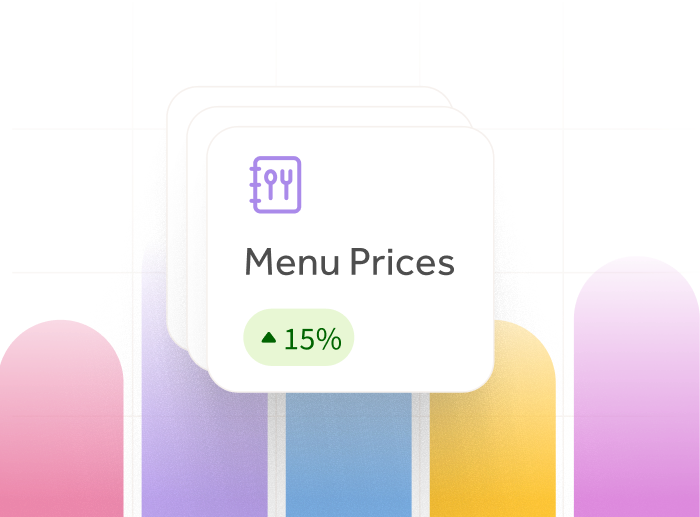
So, of particular note for actions involving menu engineering: increasing prices (43%), profitability analysis (35%), reducing/streamlining offerings (27%), and substituting lower-cost ingredients (22%) were all in the Top 7 selections. Reducing and streamlining menu options saw the biggest shift, jumping up nine points.
Restaurant operators appear willing to shift their menus as needed should inflationary pressures continue — exactly which steps they take will be interesting to see.
How are restaurant guests responding to menu price increases?
Operators appear willing to raise menu prices should inflationary pressures persist over the next year, but restaurant guests have already expressed discomfort with existing price hikes. Toast surveyed diners in July 2026 on menu pricing and found just 18% said they found price hikes “justified,” down from 41% in 20243. A majority of respondents, 53%, expressed that they were dining out less, which was about flat from 2024.
It’s not that diners don’t understand: 57% said they clearly understand why restaurants are raising prices. And respondents did cite the actual factors plaguing operators, selecting rising ingredient and food costs (77%), inflation generally (70%), and labor costs (57%) as the top drivers of price increases. Diners get it, but they appear to be growing weary of paying more, regardless.
 Start optimizing your menu
 Toast Menu Checker
Fresh ideas for your restaurant menu in 3 quick steps.

How are GLP-1s changing diners’ habits and menu engineering?
With survey data from Gallup showing some 11% of U.S. adults are taking GLP-1s, restaurants are surely taking notice. Toast surveyed diners who take GLP-1s — prescription medications that work to lessen appetites and aid in weight loss — and 51% noted eating at restaurants less often, while 62% reported eating less when they do4.
Diners described cutting back on the size of their orders — something operators would surely have to keep in mind. A whopping 98% reported cutting at least one item from their usual order at a restaurant. Desserts are taking the biggest hit: 70% of respondents said they’re ordering fewer desserts.
Interestingly, restaurant operators might want to consider offering smaller portions or gearing some items toward GLP-1 users. When asked about how their ordering habits changed, respondents showed a penchant for modifying menu items’ intentions: 44% said they ordered apps as a main, 44% said they split entrées, and 30% said they order off the kids’ menu.
With 87% of respondents saying they'd order a smaller portion if it were available and 72% saying they've already chosen a restaurant because it had smaller-appetite options, the menu engineering solution feels obvious. Restaurant operators can tweak their menus to offer cost-effective options for folks with lesser appetites. Sure, they may not eat as much, but operators will still want folks coming through their doors.
As always, a menu is a living document for restaurant operators, one that has to adjust with the times and clientele.
ข้อความปฏิเสธความรับผิดชอบ ข้อมูลนี้จัดทำขึ้นเพื่อวัตถุประสงค์ในการให้ข้อมูลทั่วไปเท่านั้น และการเผยแพร่ข้อมูลนี้ไม่ถือเป็นการรับรองใดๆ Toast ไม่รับประกันความถูกต้องหรือความสมบูรณ์ของข้อมูล ข้อความ กราฟิก ลิงก์ หรือรายการอื่นใดที่รวมอยู่ในเนื้อหานี้ Toast ไม่รับประกันว่าคุณจะได้รับผลลัพธ์ที่เฉพาะเจาะจงใดๆ หากคุณปฏิบัติตามคำแนะนำในเอกสารนี้ คุณอาจต้องปรึกษาผู้เชี่ยวชาญ เช่น ทนายความ นักบัญชี หรือที่ปรึกษาทางธุรกิจ เพื่อขอคำแนะนำที่เหมาะสมกับสถานการณ์ของคุณโดยเฉพาะ