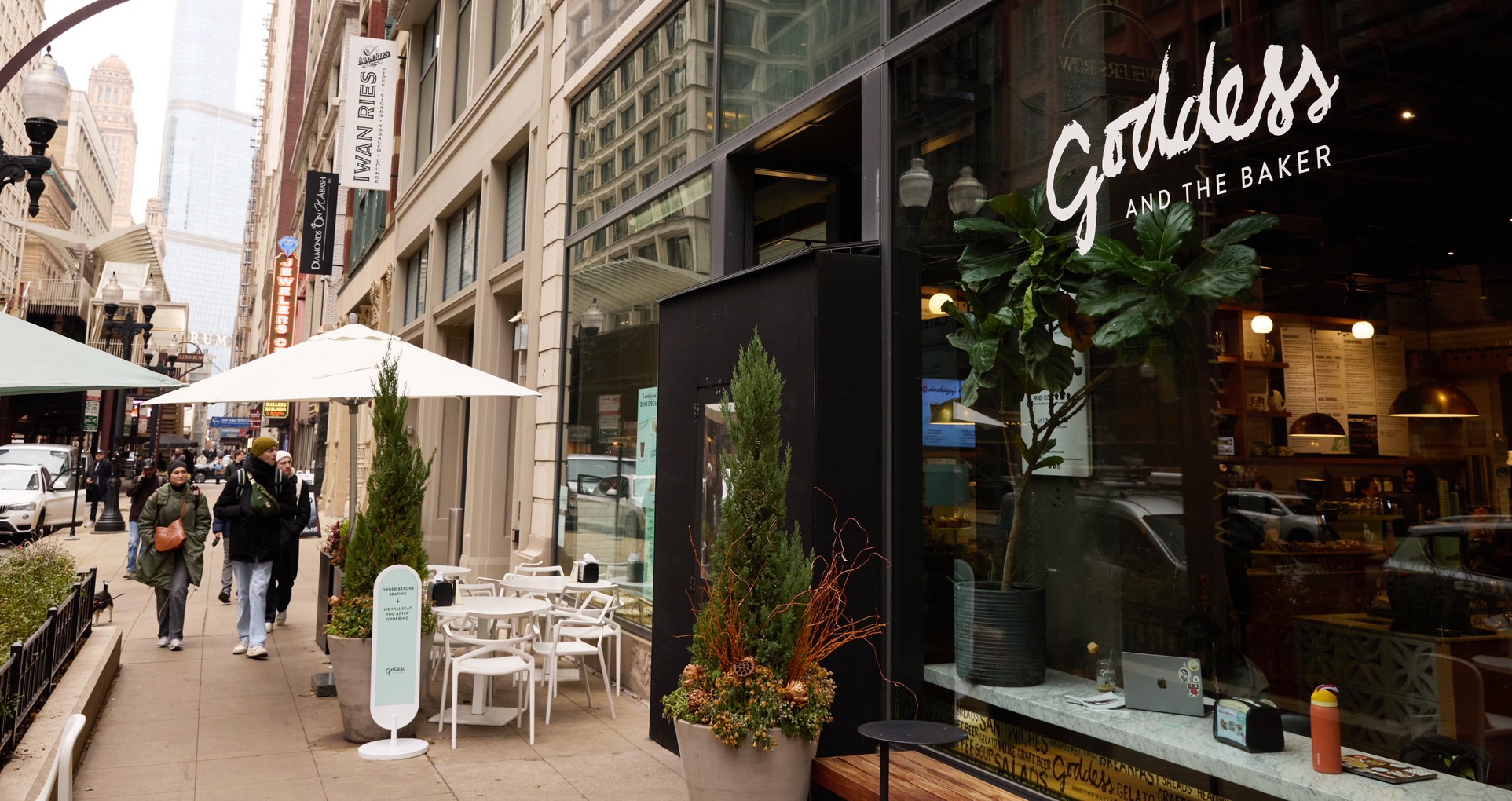

Summary: Consider matching your marketing to how guests in your market discover restaurants. Prioritize organic social visibility in dense urban areas, emphasize storefront visibility and community presence in rural areas, and use a mix of local events, loyalty, and targeted outreach in suburban markets.
There's a version of restaurant marketing advice that gets passed around like gospel: Build your social presence, post consistently, and stay at the top of the feed. It's not bad advice, but it's incomplete. Because where your restaurant sits has as much to do with how guests find you as anything you post.
New data from Toast shows that where a restaurant is located shapes how guests find it, and the channel mix looks meaningfully different depending on whether you're in a city, a suburb, or a small town. Urban guests are more likely to discover a new restaurant through social media. Suburban and rural guests are more likely to find one through a personal recommendation or simply by walking past it.
For operators, the implication is straightforward but easy to overlook: Your discovery strategy should reflect your market, not someone else's.
How discovery channels differ by location
Personal recommendations — word of mouth from a friend, family member, or coworker — remain the single most common discovery channel overall, cited by 38% of respondents. The numbers shift when you break it down by location. Rural diners rely on personal recommendations at a rate of 42%, compared to just 33% for urban diners. Suburban diners fall in between at 40%.
The physical location gap is even sharper. Thirty percent of diners overall say they discovered a restaurant by walking or driving by. That number climbs to 39% among rural diners and drops to just 22% among urban diners. A well-placed storefront on a quiet main street carries real discovery weight, but in a dense city, it competes with any number of storefronts on the same block.
Social media tells the inverse story. Overall, half of diners (50%) say social media played a role in discovering a restaurant. Among urban diners, that climbs to 56%. Among rural diners, it's 42%. Instagram and YouTube skew noticeably more urban. The platforms that dominate restaurant marketing conversation are, it turns out, most influential among the diners already surrounded by the most restaurants.
Social media matters in smaller markets, too. The relative weight of each channel just shifts depending on where your guests live and how they move through the world.
Effective urban marketing strategies
Joy Zarembka, COO of Busboys and Poets, has spent over 12 years watching how guests find the Washington, D.C.-based restaurant and bookstore. With eight locations across the DMV — from dense neighborhoods in DC to suburban outposts in Shirlington, Virginia and Columbia, Maryland — she has a close view of how discovery works across different markets.
Social media, she says, is increasingly central to how new guests find them, but not through paid campaigns or influencer partnerships.
“Organic social media is our best marketing,” Zarembka says. “It's when somebody stumbles upon us, has no idea what we are, and posts a great TikTok about it.”
Busboys and Poets runs no paid advertising. No ad agency, no influencer campaigns, just a dedicated social media strategist and the guests who show up and share. Founder Andy Shallal has long held that it's better to reach people through people — and Zarembka says that philosophy has proven out, even as the landscape has changed. What's shifted post-COVID, she notes, is the volume of competition. More restaurants, more noise, more pressure to think actively about getting people through the door.
The mechanism they find most successful remains distinctly organic. They love when a first-time visitor, surprised or excited by what they found, picks up their phone and creates content about it.
“The best version is when someone wanders in, or was told to come, and then posts something that gains a little traction,” Zarembka says. “You'll see people in the comments saying, ‘I haven't thought about Busboys in a while — I'm going to head over for the blackened salmon.’”
Guide to Restaurant Social Media Marketing
Learn how to optimize your social media presence to showcase your brand, tell your story, attract new customers, and engage with your audience.

Community-focused rural marketing strategies
In rural markets, 42% of diners say they discover restaurants through personal recommendations — the highest rate of any geography. Another 39% say they found a restaurant simply by passing by it. Those numbers reflect something about how discovery works in smaller communities: It's less about reach and more about rootedness.
Tom Kuntz has run Red Lodge Hospitality in Red Lodge, Montana for thirty years. His community has about 2,000 people, and his four restaurants and hotel have made the business a fixture of the local economy.
“Our number one thing in terms of marketing is community involvement,” Kuntz says. Red Lodge Hospitality donated over $100,000 last year to local causes and commits 1% of total revenue to the community annually — supporting schools, senior transportation, and the local Boys and Girls Club. “We're involved in the schools, sports, and all the nonprofits,” he continued.
In a town of 2,000, that kind of presence means the restaurant isn't something people discover so much as something they grow up knowing. When a business is woven into the schools, the nonprofits, and the local fundraisers for decades, word travels without much effort.
Kuntz uses his loyalty program the same way — less as a discount mechanism, more as a recognition tool.
“I think a lot of it is just recognition — being recognized,” he says. When a guest mentions their loyalty points, it signals to staff that this is a regular worth knowing. “It gives you that conversation.”
How community connection drives discovery
Zarembka and Kuntz operate in vastly different markets: one in the heart of the nation's capital, one in a Montana town of 2,000. Both will tell you that discovery starts with being genuinely embedded in the community you serve.
For Busboys and Poets, that means being a space where culture, food, and community intersect — a bookstore, an event venue, a gathering place. Guests find something unexpected. That experience is what they post about, talk about, and bring their friends back for.
For Kuntz, community investment is more tangible: donations, fundraisers, school sponsorships. When Red Lodge Hospitality hosts the annual Chef's Invitational — bringing together chefs from competing restaurants to cook a fundraising dinner for the local Boys and Girls Club — it builds visibility, trust, and goodwill that compounds over decades.
How that community connection travels is where the two diverge. In Red Lodge, it spreads through conversations and familiarity. In DC, it spreads through feeds, like a surprised first-timer posting a TikTok reminding a regular in the comments that they haven't been in a while.
How to choose marketing strategies by location
Urban and rural discovery channels point to something operators in every market can act on: The right mix of marketing channels depends on where you are.
For urban operators, social media matters more in dense markets, and organic visibility is harder to come by when you're one of hundreds of options within walking distance. Building a digital presence, making the restaurant photographable and shareable, and showing up on the platforms where city dwellers spend time is a real investment with real returns.
For suburban and rural operators, the breakdown is slightly different. Paid social may matter less than showing up at the school fundraiser. A clean, visible storefront may drive more first-time visits than a well-optimized Instagram grid. And the loyalty of regulars — the Vernettas of the world, who come in three times a week and have a preferred booth — is a discovery engine in itself.
Where you open shapes how guests find you. The operators who understand that spend less time chasing strategies built for someone else's market and more time building something worth talking about.

Subscribe to Data by Toast
Use Toast’s data insights to get ahead of the curve and track market trends on menu pricing, industry patterns, and more.
เมื่อส่งข้อมูล แสดงว่าคุณตกลงที่จะรับอีเมลการตลาดจาก Toast เราจะจัดการข้อมูลของคุณตาม คำชี้แจงความเป็นส่วนตัว ดูข้อมูลเพิ่มเติมสำหรับผู้อยู่อาศัยในรัฐแคลิฟอร์เนียได้ที่ คลิกที่นี่
ข้อความปฏิเสธความรับผิดชอบ ข้อมูลนี้จัดทำขึ้นเพื่อวัตถุประสงค์ในการให้ข้อมูลทั่วไปเท่านั้น และการเผยแพร่ข้อมูลนี้ไม่ถือเป็นการรับรองใดๆ Toast ไม่รับประกันความถูกต้องหรือความสมบูรณ์ของข้อมูล ข้อความ กราฟิก ลิงก์ หรือรายการอื่นใดที่รวมอยู่ในเนื้อหานี้ Toast ไม่รับประกันว่าคุณจะได้รับผลลัพธ์ที่เฉพาะเจาะจงใดๆ หากคุณปฏิบัติตามคำแนะนำในเอกสารนี้ คุณอาจต้องปรึกษาผู้เชี่ยวชาญ เช่น ทนายความ นักบัญชี หรือที่ปรึกษาทางธุรกิจ เพื่อขอคำแนะนำที่เหมาะสมกับสถานการณ์ของคุณโดยเฉพาะ