
Grocerant POS: What it is and How to Choose the Right System
Running a grocerant means managing two businesses under one roof. Here's what to look for in a POS system built for both.

Tác giả

 RESOURCE
 Retail POS Comparison Tool
This customizable Retail POS Comparison Tool enables you to research, evaluate, and compare point of sale systems side by side in one Excel spreadsheet.
Nhận bản tải xuống miễn phíThe grocerant model — part grocery store, part restaurant — has become one of the fastest-growing segments in food retail. Consumers want the convenience of picking up fresh-prepared meals alongside their weekly grocery haul, and operators are responding.
But running a grocerant means managing two fundamentally different business types under one roof, and a standard POS system built for only one of them will leave gaps.
A grocerant POS needs to handle retail transactions, foodservice orders, inventory across both sides of the operation, and customer loyalty – all without creating friction at checkout or in the kitchen. When the hot bar is running at capacity, and the deli counter has a line, you don't have time to troubleshoot a system that wasn't built for both.
This guide breaks down what the right system looks like in practice and what to prioritize when evaluating your options.
What is a grocerant?
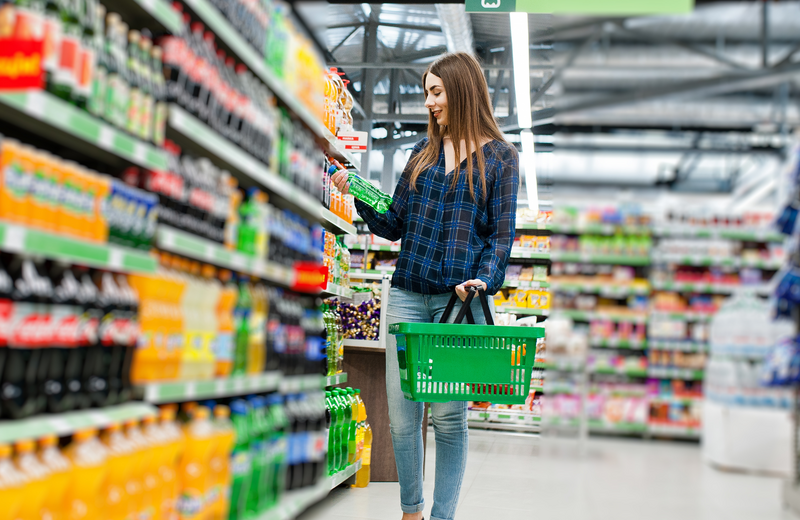
A grocerant is a hybrid retail and foodservice concept that combines grocery shopping with restaurant-quality prepared food. Think hot food bars, made-to-order deli counters, sushi stations, and grab-and-go meal sections inside a grocery store environment.
The format often appeals to time-pressed shoppers who want a full meal and their pantry staples in a single stop. According to Toast survey data, 79% of shoppers actively seek out specialty items and 59% selected grab-and-go items as a top product category.
The operational complexity that comes with this model shouldn’t be underestimated. You're managing perishable grocery inventory, prepared food production, multiple service formats (self-serve, counter service, table service), and a customer base that may be paying for a rotisserie chicken and a bag of flour in the same transaction.
Why a standard POS falls short for grocerants
Many POS systems are built with a single use case in mind — either retail or restaurant. A grocery-only POS handles barcodes and weight-based pricing, but it wasn't designed for kitchen display systems or modifier-based ordering. A restaurant-only POS handles menu items, coursing, and tipping, but struggles with PLU codes, scale integrations, and retail inventory management.
Grocerants need a system that bridges both. Without it, operators often end up running parallel systems that don't communicate — creating inventory blind spots, reporting inconsistencies, and a disjointed checkout experience.
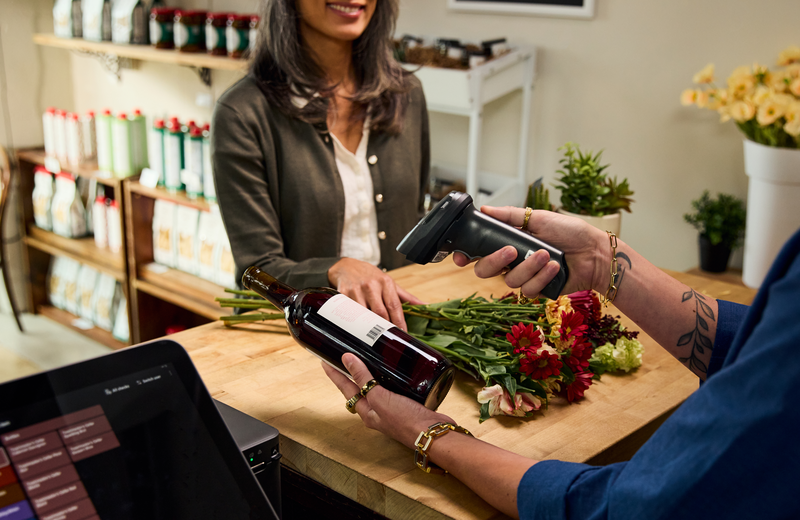
The right system closes that gap by uniting barcode scanning, kitchen display systems, and kiosks within a single platform built to handle the demands of a hybrid retail-and-restaurant concept.
Key operational challenges a grocerant POS must address include:
Dual inventory management: Tracking retail SKUs and prepared food ingredients simultaneously, with real-time depletion on both sides
Variable pricing: Weight-based items, combo deals, and modifiers all in the same transaction
Multiple service formats: Self-checkout, counter service, and sometimes full table service in the same location
Kitchen coordination: Routing prepared food orders to the right station without disrupting retail checkout flow
Loyalty and promotions: Applying discounts and rewards across both grocery and foodservice purchases
Grocery Store Profit Margin Calculator
Use this free Grocery Store Profit Margin Calculator to help consistently capture and track your profit margin.

Key features to look for in a grocerant POS
Unified inventory management
A prepared food item like a rotisserie chicken draws down both the raw ingredient inventory (whole chickens) and the finished goods count. A good grocerant POS tracks both in real time, flagging low stock before it becomes a service problem.
Toast Retail is built for exactly this kind of hybrid inventory complexity. Tools like SmartScan let you take items from scan to shelf in seconds, while AI Invoice Scanning spots efficiencies in your ordering and receiving process automatically.
For operators who need to stay on top of SKUs across both sides of the business, the Toast Now app provides real-time inventory tracking directly from your phone — so you're not waiting until end-of-day to find out you've run out of whole chickens at 11am.
Toast's inventory management tools also allow operators to track ingredient-level depletion as menu items are sold, a critical capability for the prepared foods side of a grocerant.
Kitchen display system (KDS) integration
The prepared food section of a grocerant functions like a restaurant kitchen. Orders need to be routed to the right station, timed correctly, and tracked for accuracy. A kitchen display system replaces paper tickets and keeps production organized, especially during peak lunch and dinner rushes when the deli counter and hot bar are running at full capacity.
Flexible ordering and checkout
Grocerant customers move through the store in ways that don't map neatly onto either a traditional grocery or restaurant experience. Some grab a pre-made sandwich and check out at a register. Others order a custom bowl at a counter and wait for it to be made. A grocerant POS needs to support both workflows.
New York City’s Meadow Lane uses multiple Toast-powered checkout points, each connected through the same system. “Some people buy coffee first, then shop; others do the reverse,” founder Sammy Nussdorf says. “If one checkout line starts to back up, we can easily route guests to another.” The result is an experience that feels curated and controlled, even during peak rushes.
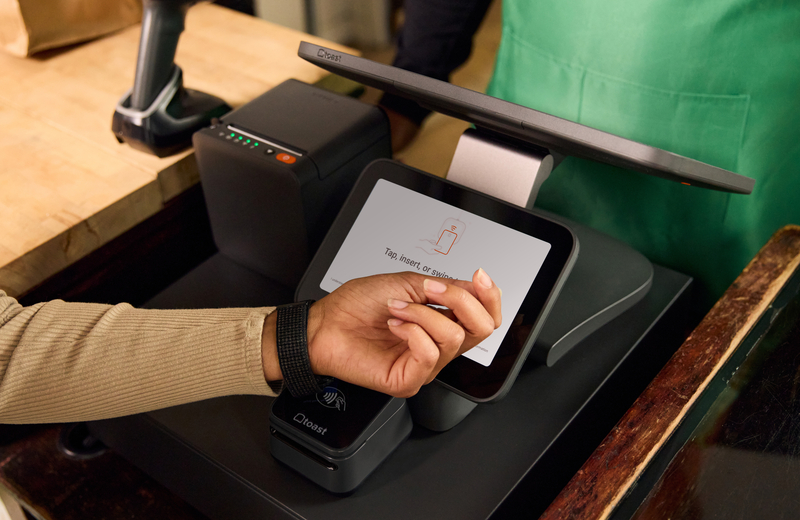
Online ordering and mobile ordering capabilities are increasingly important here, as customers expect to pre-order prepared foods for pickup while they shop or on their way to the store. Toast Go® 3, with cellular capabilities, lets staff take orders and meet guests wherever they are in the store, at a counter, in an aisle, or curbside, without being tethered to a fixed terminal.
Loyalty and customer data
Loyalty programs drive repeat visits in both grocery and restaurant contexts. For grocerants, a unified loyalty program that rewards customers across both sides of the operation — whether they're buying produce or a prepared meal — turns one-time shoppers into regulars. Two separate programs create friction and dilute the relationship; Toast Loyalty brings both into one program.
Grocery and Food Inventory Template
Use this Excel spreadsheet template to stay organized and manage your store's inventory with ease.
Reporting across both business types
Operators need to see performance data for the grocery side and the foodservice side — separately and together. Which prepared food items are driving the most revenue? What's the average transaction value for customers who buy both grocery and prepared food? Which items are generating the most waste? A grocerant POS should surface this data in a format that's actually useful for making decisions.
Toast's reporting and analytics give operators a real-time view of sales, labor, and menu performance — the kind of visibility that helps grocerant operators manage two revenue streams without losing sight of either.
What grocerant operators should evaluate before choosing a POS
Before committing to a system, grocerant operators should work through a few practical questions:
What's the primary revenue driver? If prepared food is the core business, prioritize a restaurant-grade POS with retail capabilities built in. If grocery is primary, start with a retail system and evaluate foodservice integrations carefully.
How complex is the prepared food menu? A hot bar with pre-made items is simpler to manage than a made-to-order counter with modifiers, allergen tracking, and custom builds. The more complex the menu, the more you need a true restaurant POS on that side.
What does checkout look like? If customers are combining grocery and prepared food in a single transaction, you need a system that can handle both item types at the same register.
What integrations are required? Scale integrations for weight-based items, loyalty platforms, accounting software, and online ordering all need to connect cleanly.
Can the system stay up when the internet doesn't? A grocerant running seven days a week with extended hours can't afford a system that goes down when connectivity gets spotty. Offline mode isn't a nice-to-have — it's a baseline requirement. Look for hardware built to keep everything running regardless of what's happening with your connection.
What does support look like? 24/7 support is non-negotiable for an operation that never really closes.
How Toast Retail fits the grocerant model
Toast Retail is the technology partner for retail owners who need to manage both sides of their business without duct-taping two separate systems together.
Operators who've made the switch describe the difference clearly:
"Through Toast, we saw our top-selling SKUs and decided to cut the menu by about 30%. We increased pars on the top sellers and simplified the rest." - Sammy Nussdorf, Meadow Lane founder.
That's the grocerant use case in a sentence, and it's exactly what Toast Retail is built to support.
For operators running a more traditional grocery store with a foodservice component, the right approach may involve using Toast Retail for the prepared foods while connecting it to retail-specific tools for the broader grocery floor, with shared customer and inventory data bridging the two where possible.
Toast's platform is designed to scale, which matters for grocerant operators who may start with a single prepared foods station and expand to multiple service formats over time. Toast Go® 3 with cellular capabilities allows staff to take orders anywhere on the floor without interruption, useful in a grocerant environment where the service floor doesn't look like a traditional restaurant.
Grocery Store Operations Manual Template
Use this free template to easily outline all of your operating procedures and make day-to-day operations as consistent as possible.
FAQs
What is a grocerant POS? A grocerant POS is a point-of-sale system designed to handle both retail grocery transactions and foodservice operations within the same environment. It needs to support barcode scanning, weight-based pricing, kitchen display routing, modifier-based ordering, and unified inventory management across both sides of the business.
Can I use a restaurant POS for a grocerant? Yes, particularly if the prepared food component is the primary revenue driver. Toast Retail handles the foodservice side — ordering, kitchen routing, inventory depletion, loyalty, and reporting — and can be paired with retail-specific tools for the grocery floor. Its hybrid workflow capabilities make it a strong fit for operators managing both revenue streams under one roof.
What's the difference between a grocerant and a grocery store with a deli? A traditional deli counter is a secondary feature of a grocery store. A grocerant treats prepared food as a core part of the business model — with restaurant-quality offerings, dedicated service formats, and often a seating area. The operational complexity is significantly higher, which is why the POS requirements are different.
Does Toast work for grocerant operations? Yes. Toast Retail is built for hybrid retail and foodservice operations and is well-suited for the prepared food side of a grocerant. It supports counter service, online ordering, kitchen display systems, Toast Loyalty, real-time inventory tracking, and reporting across both sides of the business — all essential for running a high-volume prepared foods program within a retail environment.
What should I prioritize when choosing a grocerant POS? Focus on unified inventory management, flexible checkout that handles both retail and foodservice items, kitchen display system integration, a loyalty program that works across both sides of the operation, and reporting that gives you visibility into both revenue streams. System reliability — including offline mode — and 24/7 support are non-negotiable for a seven-day-a-week operation.
Bài viết này có hữu ích không?
TUYÊN BỐ MIỄN TRỪ TRÁCH NHIỆM: Thông tin này chỉ được cung cấp cho mục đích tham khảo chung và việc xuất bản không cấu thành sự xác nhận. Toast không đảm bảo tính chính xác hoặc đầy đủ của bất kỳ thông tin, văn bản, đồ họa, liên kết hoặc các mục nào khác có trong nội dung này. Toast không cam đoan bạn sẽ đạt được kết quả cụ thể nào nếu bạn làm theo lời khuyên bất kỳ trong tài liệu này. Bạn nên tham khảo ý kiến của chuyên gia như luật sư, kế toán viên hoặc cố vấn kinh doanh để được tư vấn cụ thể cho tình huống của mình.

Subscribe to On the line
Sign up to get industry intel, advice, tools, and honest takes from real people tackling their restaurants' greatest challenges.
Bằng việc gửi, bạn đồng ý nhận email tiếp thị từ Toast. Chúng tôi sẽ xử lý thông tin của bạn theo tuyên bố về quyền riêng tư. Thông tin bổ sung dành cho cư dân California có tại tại đây.