Best Self-Ordering Kiosk for Restaurants in Ireland
Learn how to choose the best self-ordering kiosk for your restaurant, covering operations, guest experience, and compliance.
Author
If you’re searching for the best self-ordering kiosk for your restaurant, you’re probably looking for something that helps you serve more guests with less friction, supports your staff during busy services, and fits naturally into how your restaurant already runs.
This guide looks at what makes a self-ordering kiosk genuinely effective for certain Irish restaurants, how it impacts day-to-day operations, what local considerations matter, and how it fits into a modern, integrated restaurant setup.
What a Self-Ordering Kiosk Is and How It Works
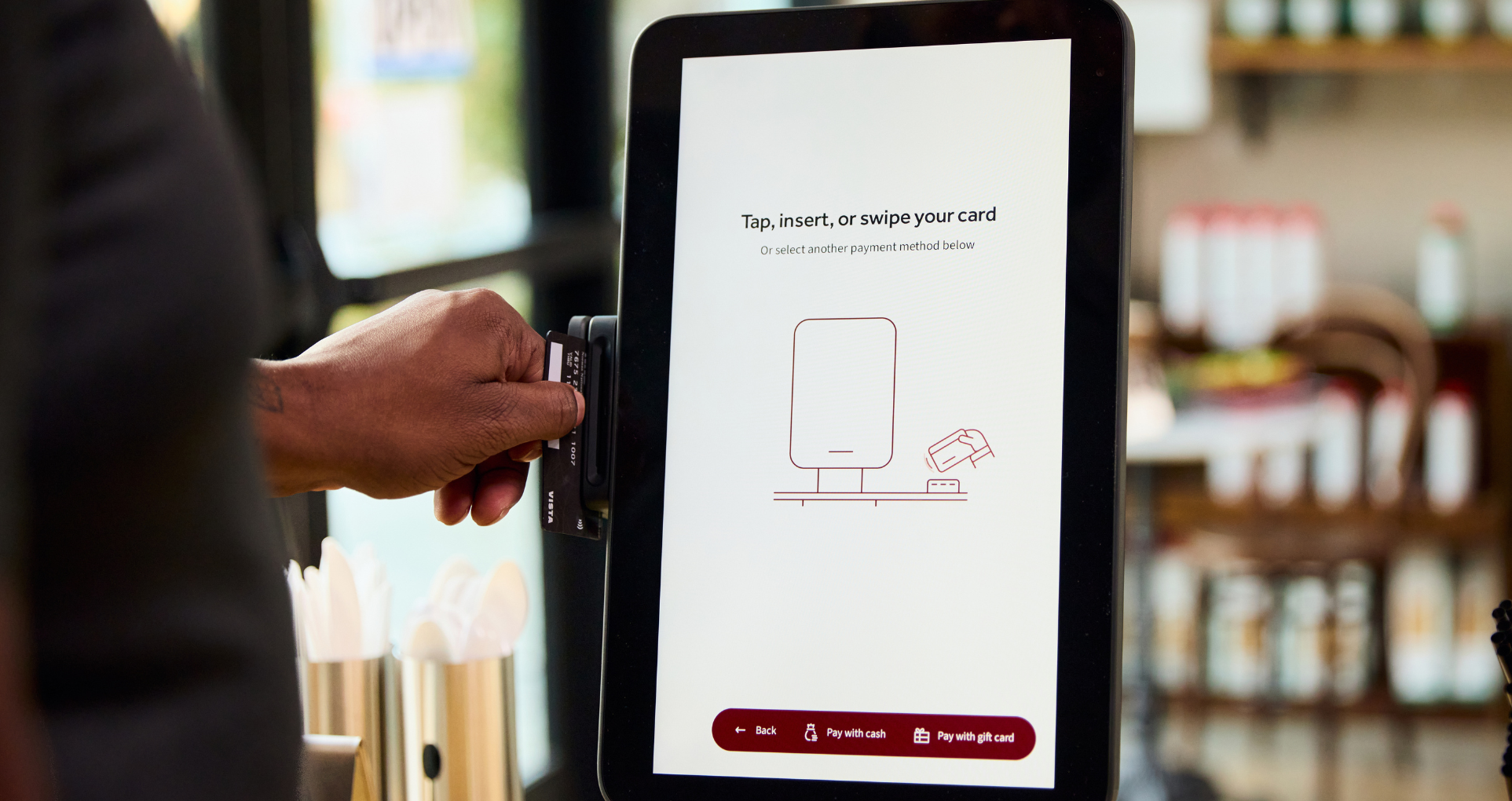
A self-ordering kiosk is a touchscreen device that allows guests to browse your menu, customise items, and pay without going to the counter. In a well-designed setup, the kiosk is connected directly to your point of sale system, kitchen display system, and payments infrastructure.
That connection is what makes kiosks actually useful. When a guest taps through an order on the screen, it should land in the exact same system your team uses every day. The order goes straight to the right kitchen station, customisations come through clearly, and the payment is logged with everything else. This means that no one has to type it in again and reporting becomes easy.
For the guest, the experience feels simple and intuitive. For the operator, the value comes from how seamlessly the kiosk fits into existing workflows rather than creating another system to manage.
Why Self-Ordering Kiosks Are Gaining Traction in Ireland
Irish diners are selective and value convenience, clarity, and choice when eating out. Consumer research consistently shows that menu variety and ease of ordering play a significant role in restaurant choice, alongside price and atmosphere. Kiosks speak directly to that need by giving guests time to browse, customise, and order at their own pace.
From an operational perspective, many Irish operators are focused on efficiency rather than expansion at any cost. Investing in technology that helps them do more with the teams they already have, particularly during peak periods.
Self-ordering kiosks support that goal by absorbing some of the ordering and payment workload during busy services.
The Operational Impact of a Good Kiosk Setup
The real test of a self-ordering kiosk is how it performs on a Saturday lunch rush or a rainy weekday evening.
In counter-service and quick-service restaurants, kiosks can take the edge off busy periods. Instead of everyone queuing at a single till, guests can order at different screens, which helps prevent bottlenecks and keeps the space feeling calmer, even when it’s busy.
In more mixed or casual dining setups, kiosks usually sit alongside a staffed counter rather than replacing it. That gives guests options. Some people will always want to order from a person, while others are perfectly happy to tap through an order themselves, especially if they’ve been in before. You’re not forcing one way of ordering, just giving people the choice.
Behind the scenes, kiosks can also make life easier in the kitchen. Orders entered by guests tend to come through more clearly, with fewer mix-ups around changes or allergens.
What to Look for When Evaluating Self-Ordering Kiosks
Start with integration. If a kiosk doesn't connect directly to your POS and KDS, it might add more complexity than its worth. Sure, standalone systems might seem easier at first, but they'll create headaches down the line. You want everything like menus, prices, stock levels, reports living in one place.
Payment handling is huge, especially in Ireland where everyone expects to tap and go. Your kiosk should handle contactless and mobile wallets smoothly, with chip and PIN there if needed. And it should do all this without requiring extra hardware that clutters up your counter.
Then there's menu management, which gets overlooked until it becomes a daily frustration. Your menu changes. Items run out. Prices shift. You need a system where you update things once and they're instantly reflected everywhere rather than one where you're manually syncing three different versions.
Don't forget the basics: durability and accessibility. Restaurant equipment takes a beating. Spills happen. The kiosk runs all day, every day. And your interface needs to work for everyone—clear text, logical flow, enough time for people to actually complete their order without feeling rushed.
A Note on Guest Experience and Brand Feel
There's this worry that kiosks make restaurants feel cold or robotic. But in reality, they can actually do the opposite.
By handling the rush of orders during busy periods, kiosks free up your team to do what machines can't like greet people warmly, answer questions properly, deliver food with a smile. Real hospitality instead of transactional order-taking.
The trick is in how you introduce them. Kiosks should feel like a helpful option, not a forced checkpoint. Clear signage helps. Staff who guide rather than redirect helps. And placement matters—don't let them block the natural flow of your space or make people feel like they're navigating an obstacle course.
Where Toast Fits into a Self-Ordering Kiosk Setup
Toast Kiosk is designed specifically for restaurant environments, rather than adapted from retail or generic self-service technology. That restaurant-first approach shows up in how the kiosk connects to the wider Toast platform.
Orders placed at Toast Kiosk flow directly into Toast POS and Toast Kitchen Display System, using the same menu logic, modifiers, and reporting. This means your team doesn’t have to learn a separate workflow or manage parallel systems.
Irish operators using Toast often point to the value of having payments, orders, and reporting unified. Instead of reconciling kiosk transactions separately, everything appears in the same dashboards used for day-to-day decision-making.
Toast Kiosk also supports custom branding and menu presentation, helping the kiosk feel like an extension of your restaurant rather than a generic terminal.
Regional Considerations for Irish Restaurants
When you’re rolling out self-ordering kiosks in Ireland, it’s worth thinking beyond the screen itself and considering the wider context they’ll sit in.
Accessibility, in particular, matters more than ever. There isn’t one single rulebook for restaurant kiosks, but guidance from the National Disability Authority points to some clear principles. These include that screens should be easy to read, menus simple to navigate, and layouts designed so guests with mobility or visual impairments aren’t left out. Where possible, kiosks should be positioned sensibly on the floor and backed up by staff who can step in and help if needed.
Payment security is another important piece. Any kiosk taking card payments needs to meet PCI DSS standards. Using a well-established restaurant technology provider can take a lot of that complexity off your plate, as security is built into the platform rather than becoming something you have to manage on your own.
Pricing transparency also matters. Under Irish consumer protection rules, guests must be able to see clear pricing, including any applicable taxes or service charges, before completing an order. A well-designed kiosk interface makes this clarity easier to achieve, not harder.
This information is provided for general awareness only and should not be considered legal advice.
How to Decide If a Kiosk Is Right for Your Restaurant
Not every restaurant needs a self-ordering kiosk, and that’s okay. They tend to deliver the most value in environments where queues form, menus are customisable, and speed of service has a direct impact on guest satisfaction.
If your team regularly feels stretched at the counter, or if guests are waiting longer than you’d like just to place an order, a kiosk may be worth serious consideration. If your service model is highly personalised or table-led, kiosks may play a smaller, more targeted role.
The best approach is to think in terms of balance. Kiosks are a tool to support your staff and guests, not a one-size-fits-all solution.
Final Takeaway
The best self-ordering kiosk is one that fits naturally into how you already operate so it can support your team during busy moments, and delivers a clear, intuitive experience for guests.
Across Ireland, more operators are choosing technology that quietly removes friction instead of creating extra steps. When a kiosk is properly connected to your POS, payments, and kitchen systems, it helps you serve more people smoothly and confidently, while still leaving room for the warm, human hospitality your guests come for.
Is this article helpful?
DISCLAIMER: This information is provided for general informational purposes only, and publication does not constitute an endorsement. Toast does not warrant the accuracy or completeness of any information, text, graphics, links, or other items contained within this content. Toast does not guarantee you will achieve any specific results if you follow any advice herein. It may be advisable for you to consult with a professional such as a lawyer, accountant, or business advisor for advice specific to your situation.

Subscribe to On the line
Sign up to get industry intel, advice, tools, and honest takes from real people tackling their restaurants' greatest challenges.
By submitting, you agree to receive marketing emails from Toast. We’ll handle your info according to our privacy statement. Additional information for California residents available here.